- Hard tissue felt inside the nostril or along the columella after rhinoplasty is often scar tissue: collagen that overgrew while the incision healed.
- Dr. Sun Clinic does not cut it out. Dr. Kang combines laser, RF and micro-needles to change the scar tissue itself, in 5–15 minute sessions, usually 2–5 sessions 4–6 weeks apart.
- Early swelling and scar tissue look alike, so the timing of treatment is set by looking at when the surgery was and how firm the tissue feels.
※ Results and side effects vary between individuals; an in-person examination is needed to confirm your condition.
“Doctor, it's been more than six months since my nose surgery and the inside of my nostril is still hard. Is revision surgery my only option?”
Hello, this is Dr. Sun Clinic in Seoul.
Many patients come to us months after rhinoplasty because the inside of the nostril still feels hard, or the tip looks bulkier and firmer than expected. Some have already been told elsewhere that the tissue must be removed with another operation.
This article explains why scar tissue forms inside the nose, how it can be reduced without revision surgery, and shows a real case, based on Dr. Kang Jeong Joong's clinical experience.
Videos from Dr. Sun Clinic
Why does scar tissue form inside the nose?
Every incision heals by producing collagen. In some people this goes too far and leaves thick, hard tissue inside the nostril or along the columella. It is more likely after several revision surgeries, when vessels and tissue have been injured repeatedly.
The tip may look larger or firmer, the nostrils may become asymmetric, or the nose may feel blocked.
Swelling or scar tissue?
In the first months they look similar. Swelling is soft and slowly goes down; scar tissue stays firm.
Laser for swelling and bruising can start two weeks after surgery (ideally between weeks 4 and 8). If the tissue is still firm months later, scar treatment is considered.
Can it be treated without revision surgery?
In many cases, yes. Instead of cutting the scar out, the treatment triggers biochemical changes in the scar so the body's own repair process remodels it toward normal tissue. No cutting, no scraping, no injected drugs.
Results and the number of sessions depend on the thickness and location of the scar and on previous surgeries, so the condition is checked first by photos or examination.
The procedure and recovery
The local anesthetic injection stings for 5–10 seconds; the procedure itself takes 5–15 minutes. Because it is inside the nose, the treated area is barely visible.
The effect often looks best on day one, swelling may last about a week, and the final result is seen at around two weeks. Showers, exercise and daily life are fine; avoid baths and saunas while healing.
This case at a glance
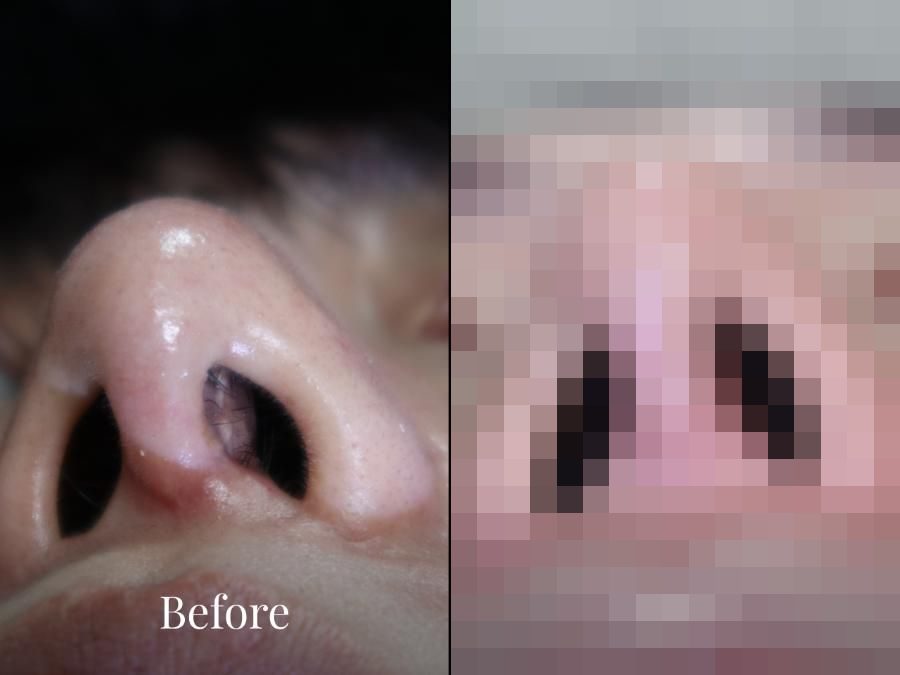
Reducing scar tissue inside the right nostril
After rhinoplasty, scar tissue thickened inside this patient's right nostril and the two nostrils no longer matched. We treated it with scar laser, without revision surgery.
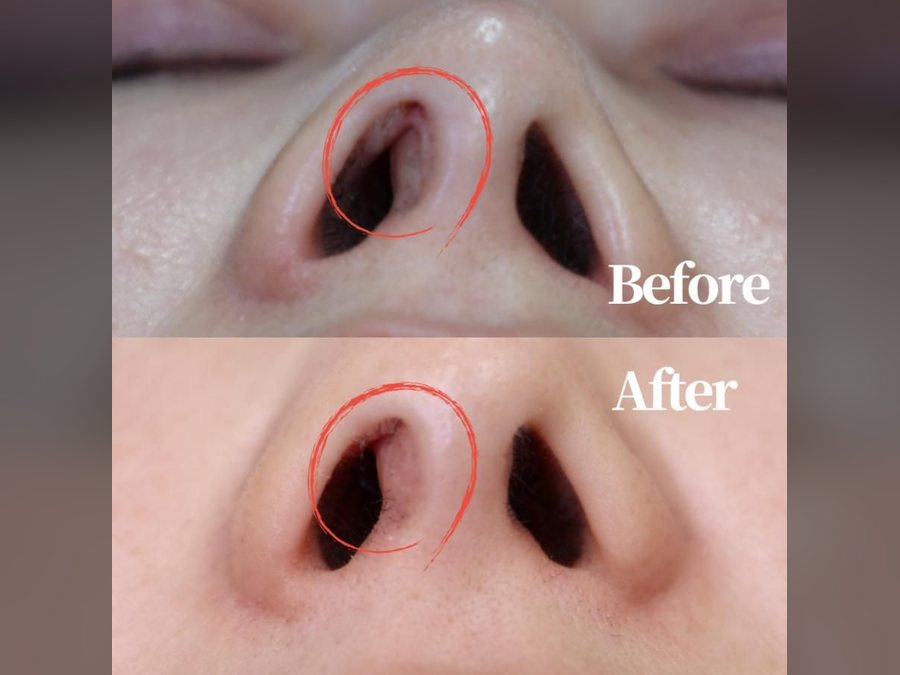
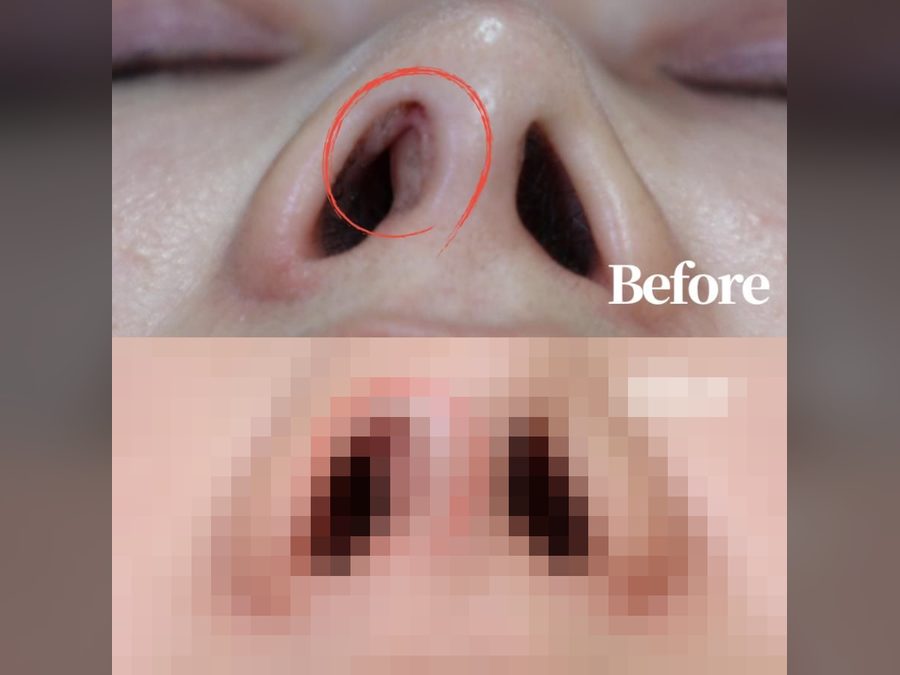
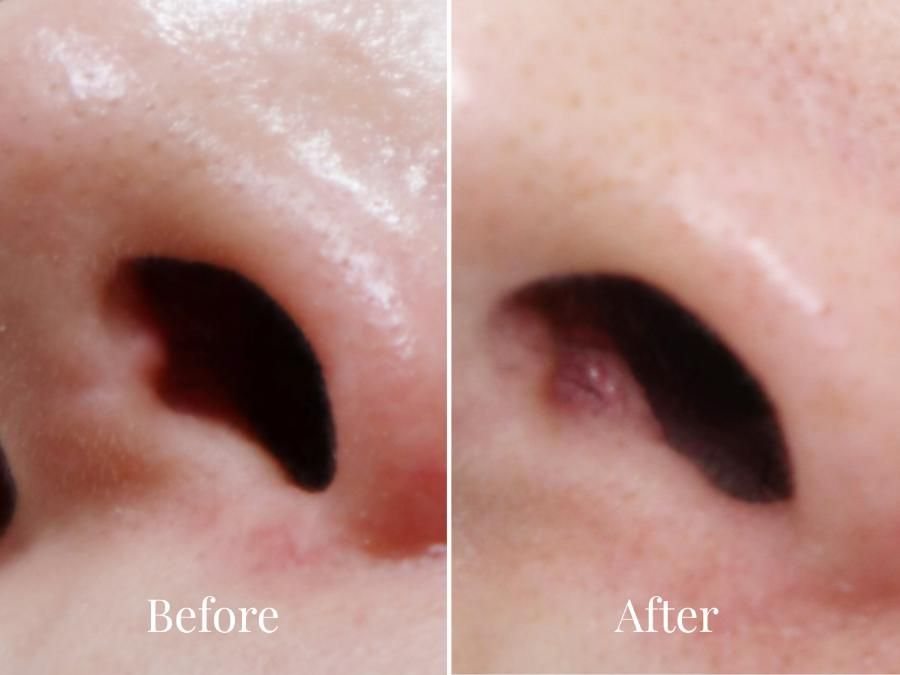
- Before (2025-12-26)
Scar tissue inside the right nostril made it look narrower and asymmetric.
- Scar laser treatment
Dr. Kang designed a laser, RF and micro-needle combination for the scar's thickness and position and adjusted energy in real time.
- Two months later (2026-02-20)
The scar volume decreased and the nostril shape became closer to the other side.
As the second photo shows, some patients see a change in volume right after the first session. The number of sessions and the result depend on the scar.
Before-and-after photos are unretouched photos of real patients. Results and how long they last vary by person. Like any medical procedure, treatment can have side effects such as pain, bleeding, bruising, swelling, infection, perforation, pigmentation or scarring. Please consult the doctor before treatment.
Unretouched photos of real patients, shown with consent. Eyes are masked. Results vary.
How Dr. Sun Clinic treats it
Dr. Kang handles every step himself, from consultation to procedure and aftercare. After checking the thickness, position and firmness of the scar, he chooses the combination he needs from about 300 laser modes and delivers energy only to the scar tissue.
He adjusts the energy in real time while watching the tissue response, then reviews progress after one to two months to decide whether more treatment is needed. Patients abroad or outside Seoul can start with a photo consultation.
3 key points
- Scar tissue inside the nose is overgrown collagen and can often be softened with laser, without revision surgery.
- Each session takes 5–15 minutes, usually 2–5 sessions 4–6 weeks apart, with little disruption to daily life.
- Telling swelling from scar tissue comes first, so the timing is decided after checking photos or examining you.
Questions patients ask
Do I need revision surgery for scar tissue inside my nose?
Not always. Many patients are treated with laser and RF without another operation. It depends on the scar, so the doctor reviews photos first.
How many sessions will I need?
Usually 2–5 sessions, 4–6 weeks apart. Some patients notice a clear change after one session.
Does it hurt?
The anesthetic injection stings for about 5–10 seconds. After that the procedure takes only a few minutes.
How long after surgery can I start?
Swelling and bruise laser can start two weeks after surgery; scar treatment timing depends on your condition. Send your surgery date and current photos for exact advice.
If you are dealing with this
If you have been told revision surgery is the only option, first check whether your current condition can improve with laser. Send your surgery date and photos showing the inside of the nostril, and Dr. Kang will review them personally and tell you how many sessions to expect.
This has been Dr. Sun Clinic in Seoul. Thank you for reading.
Send us photos and Dr. Kang will review them and reply personally.
Evidence and references
- Anderson RR, et al. Laser treatment of traumatic scars with an emphasis on ablative fractional laser resurfacing: consensus report. JAMA Dermatol. 2014;150(2):187-193.Expert consensus on ablative fractional laser for traumatic and surgical scars; reports effective scar remodeling (consensus, not a randomized trial).
- Seago M, et al. Laser Treatment of Traumatic Scars and Contractures: 2020 International Consensus Recommendations. Lasers Surg Med. 2020;52(2):96-116.2020 international consensus recommendations on laser treatment of traumatic scars and contractures; covers laser choice and combination by scar type (not specific to intranasal scar tissue).
Related articles
Before-and-after photos are unretouched photos of real patients. Results and how long they last vary by person. Like any medical procedure, treatment can have side effects such as pain, bleeding, bruising, swelling, infection, perforation, pigmentation or scarring. Please consult the doctor before treatment.