- If you suspect a complication after cosmetic surgery, first contact the clinic that performed it; if there are emergency signs—fever, pus, sudden one-sided swelling, skin colour change or vision problems—get medical care without delay.
- Suspected infection, tissue necrosis, haematoma, implant problems or nerve damage belong to your surgeon or the relevant specialist first, not to a scar clinic.
- If it is not an emergency but hardness, tightness, lumpiness or stiff expressions remain after several months, scar tissue or adhesion may be the cause—and this can often be treated with a laser-based approach without revision surgery.
- Swelling and bruising laser can start from 2 weeks after surgery (4–8 weeks recommended); scar tissue treatment usually takes 2–5 sessions 4–6 weeks apart depending on the area, with many sessions lasting 5–15 minutes.
※ Results and side effects vary between individuals; an in-person examination is needed to confirm your condition.
“Doctor, it has been a few months since my surgery and something still feels wrong. I don't know whether to go back to my surgeon, look for another clinic, or what to do first.”
Hello, I'm Dr. Kang Jeong Joong, medical director of Dr. Sun Clinic in Seoul, Korea.
In scar tissue consultations, the thing I hear most often is: "I don't know if this is a complication, whether I should just wait, or whom to ask." Between anxiety right after surgery, discomfort that doesn't improve, and conflicting advice, many people spend months searching online on their own.
In this article I'll explain the order in which to think when you suspect a complication, which emergency signs need immediate care, and, honestly, what a scar clinic can and cannot help with.
Videos from Dr. Sun Clinic
What should I do first if I suspect a cosmetic surgery complication?
The first step is to contact the clinic that performed your surgery and tell them how you are. They know best what was done, which materials were used and what happened during the operation, and many early problems are fastest to check and manage there.
At the same time, keep records. Write down the date and name of the operation, materials such as implants or cartilage, any medicines you take and the day symptoms began. Taking front and side photos every few days in the same light and angle helps a great deal in judging whether things are changing.
If you cannot reach your surgeon or feel the explanation is not enough, getting an opinion from another specialist in the same field is also an option. What matters is not waiting alone and putting off a decision.
Which warning signs need immediate medical care?
Fever, pain that gets worse day by day, or a surgical area that is red, hot and draining pus suggests infection. Sudden, large, firm swelling on one side with spreading bruising may be a haematoma.
Skin that turns dark red, purple or white and feels cold may be an early sign of a blood-supply problem—tissue necrosis—and time is critical. Blurred vision or eyes that won't close, difficulty breathing, an implant showing through or pushing out of the skin, loss of sensation, or one side of the face not moving also need care right away.
If you have any of these signs, go to your surgeon, an emergency department or the relevant specialist (plastic surgery, ophthalmology, ENT, neurology and so on)—not to a scar clinic. These are not problems for laser, and delay can make recovery harder.
How are lasting scar tissue and adhesion different?
If there are no emergency signs and the early swelling and bruising have gone, but hardness, tightness, lumpiness or awkward facial expressions remain unchanged after several months, scar tissue or adhesion is worth considering. Scar tissue is firm tissue left when too much collagen forms during healing; adhesion means layers of tissue have stuck together and movement is restricted.
In the nose it often shows up as hardness inside the nostrils or at the tip; around the eyes, as a thick or wavy double eyelid crease; and after facial contouring or liposuction, as a face that looks lumpy or hollow and feels tight. A large share of what people call long-term after-effects of cosmetic surgery falls into this group.
Scar tissue and adhesion are not urgent like infection or necrosis, but they often do not improve much on their own. On the other hand, repeated revision surgery can create more scar tissue in the same place, so it is important to identify the cause accurately before cutting again.
What does a scar clinic treat—and what doesn't it treat?
At Dr. Sun Clinic we treat scar tissue and adhesion that remain after surgery, and swelling and bruising after surgery. We do not cut or shave scar tissue and do not inject drugs; a combination of laser, radiofrequency and micro-needles changes the scar tissue so the body's natural healing process rebuilds it closer to the original skin. To me, scar treatment is ultimately about bringing the tissue back to your own skin.
Treating infection, managing necrosis, removing a haematoma, removing or replacing implants, problems with bone or cartilage position, and diagnosing or treating nerve damage belong to your surgeon or the relevant specialist. Problems that require changing the design itself are not solved by scar treatment either. In those cases I look at the photos and tell you honestly: please see your surgeon first.
One more point: skin-tightening lifting devices are not designed to target the scar tissue that forms after surgery. If scar tissue is what causes the discomfort, treatment aimed at the scar tissue is needed. I have practised for 20 years, and I still do not promise results. I believe the first step is an honest judgement of whether improvement is possible.
When can treatment start, and what are the process and recovery like?
If you are worried about swelling and bruising, swelling and bruising laser can be considered from 2 weeks after surgery, and unless there is a particular reason I recommend between 4 and 8 weeks. It takes 40 minutes to an hour, has almost no downtime and usually needs only one session.
Scar tissue treatment differs by area. Scar tissue inside the nose and eyelid scar tissue often take 5–15 minutes per session, usually 2–5 sessions 4–6 weeks apart; columella incision scars are treated 3–4 weeks apart; adhesion after facial contouring usually takes 4–5 sessions 2–4 weeks apart, depending on the situation. The effect often looks good on the first day, there may be swelling for about a week, and the result is assessed at around 2 weeks.
Showers, exercise and most daily activities are fine; during recovery, just avoid saunas and baths. The photo below shows a columella incision scar after three sessions; the number of sessions and the result vary with the condition of the scar tissue.
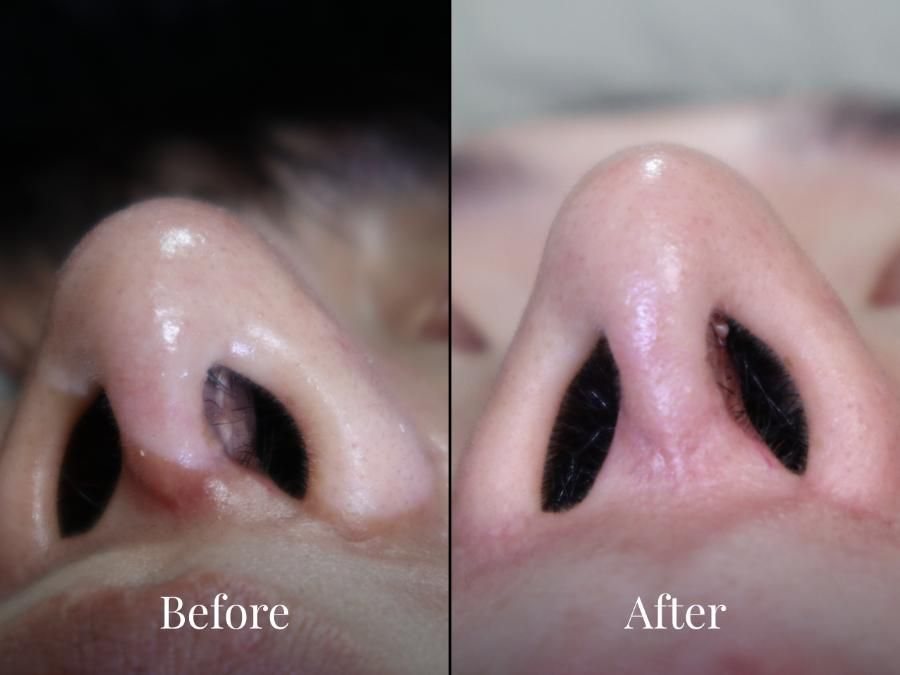
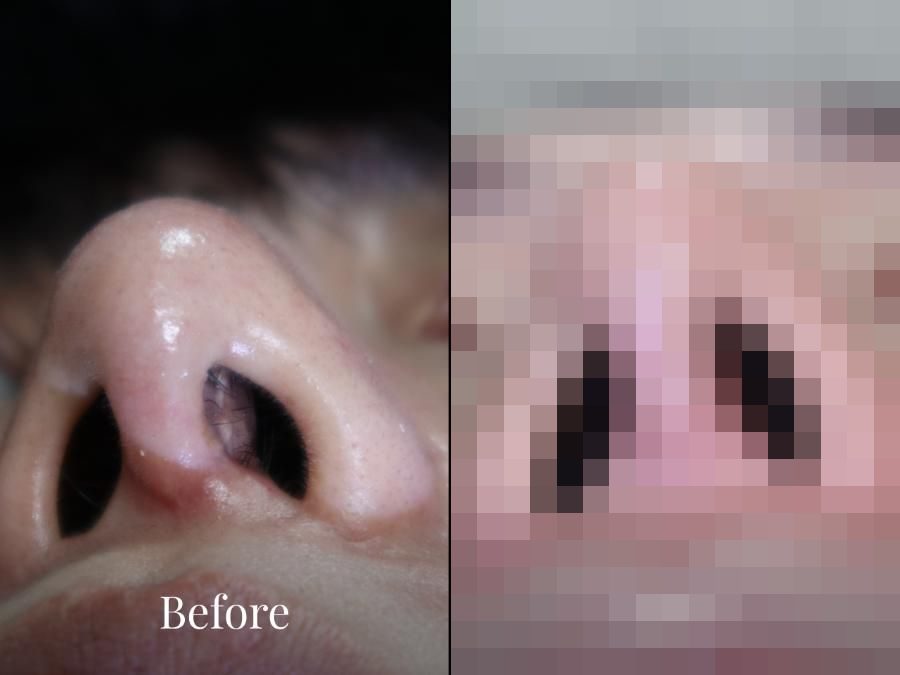
Before-and-after photos are unretouched photos of real patients. Results and how long they last vary by person. Like any medical procedure, treatment can have side effects such as pain, bleeding, bruising, swelling, infection, perforation, pigmentation or scarring. Please consult the doctor before treatment.
Unretouched photos of real patients, shown with consent. Eyes are masked. Results vary.
How Dr. Sun Clinic treats it
As medical director, I personally handle consultation, treatment and follow-up. At the photo-consultation stage, I first tell you whether scar tissue or adhesion is the main cause, or whether your surgeon or another specialist should see you first.
If it is scar tissue, I design a combination of laser, radiofrequency and micro-needles for the area, depth and firmness, and adjust it in real time as the tissue responds. Progress is checked with photos after each session to decide together on the next step.
3 key points
- If you suspect a complication, contact your surgeon first and keep records: surgery details, symptom dates and photos from the same angles.
- Fever, pus, sudden one-sided swelling, skin colour change, vision problems or difficulty breathing are emergency signs—your surgeon, an emergency department or the relevant specialist comes first.
- Hardness, tightness or lumpiness that remains for months without emergency signs may be scar tissue or adhesion, which can often be treated with laser without revision surgery.
Questions patients ask
Where should I go if I have a cosmetic surgery complication?
Contacting the clinic that performed your surgery comes first. Emergency signs such as fever, pus, skin colour change or vision problems mean going to an emergency department or the relevant specialist right away. Scar tissue or adhesion that lasts for months can be discussed with a scar clinic.
How can I tell normal swelling from a complication?
Swelling is fairly soft and goes down gradually over time. If hardness stays the same after several months, or symptoms get worse with heat or pain, you should be examined.
Does scar tissue or adhesion need revision surgery?
Not necessarily. When scar tissue is the main cause, improvement without revision surgery can be expected in many cases with laser-based treatment, usually 2–5 sessions 4–6 weeks apart depending on the area.
How soon after surgery can I have laser treatment?
Swelling and bruising laser is possible from 2 weeks after surgery, with 4–8 weeks recommended. The timing of scar tissue treatment is decided from your surgery date and current photos.
If you are dealing with this
When something goes wrong after cosmetic surgery, it is easy to spend time anxiously searching online. If there are emergency signs, get care without delay; if discomfort remains over time, first find out whether scar tissue is the cause. Being seen by the right specialist for the cause is the first step to recovery.
Send me the date and type of your surgery and photos of the area that bothers you, and I will look personally and tell you honestly whether scar tissue or adhesion is the cause or whether another kind of care should come first. Wherever you live, one photo is enough to start a consultation in 15 languages.
This has been Dr. Kang Jeong Joong of Dr. Sun Clinic in Seoul. Thank you for reading.
Send us photos and Dr. Kang will review them and reply personally.
Evidence and references
- Seago M, et al. Laser Treatment of Traumatic Scars and Contractures: 2020 International Consensus Recommendations. Lasers Surg Med. 2020;52(2):96-116.2020 international expert consensus on laser treatment of traumatic and surgical scars and contractures. Not a study of cosmetic surgery complications in general; individual results vary.
- Anderson RR, et al. Laser treatment of traumatic scars with an emphasis on ablative fractional laser resurfacing: consensus report. JAMA Dermatol. 2014;150(2):187-193.2014 expert consensus report on treating traumatic scars, centred on ablative fractional laser. Not a randomised controlled trial.
Related articles
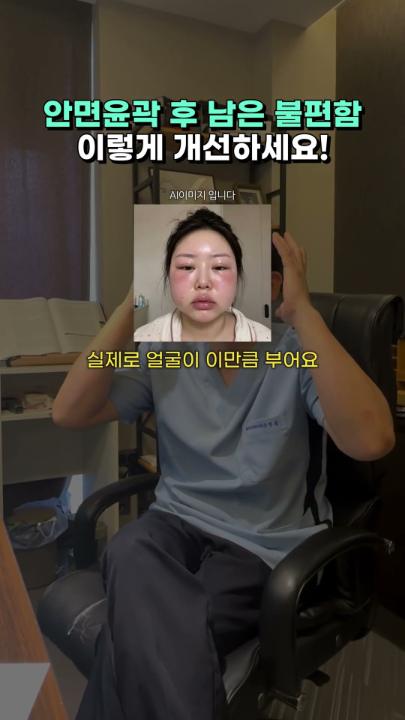
Why does my face feel lumpy and stiff after facial contouring? Scar tissue, adhesion and treatment without revision surgery
Lumps, tightness or stiff expressions months after facial contouring are often scar tissue and adhesion. How to tell them from swelling or nerve problems, and how laser treatment works without revision surgery.
Dr. Kang's column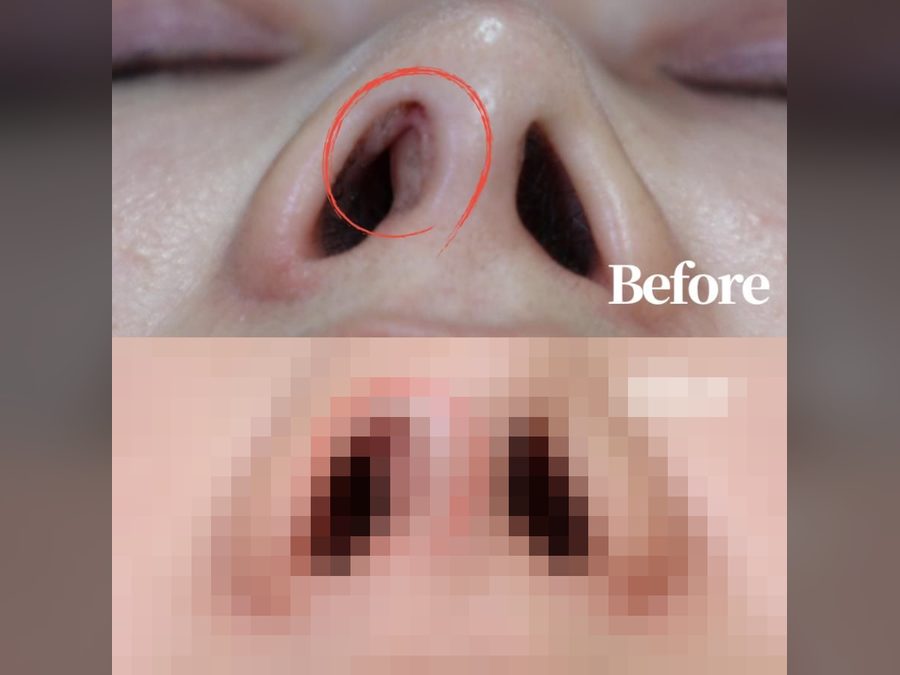
Hard scar tissue inside the nose after rhinoplasty: can laser reduce it without revision surgery? (with a real case)
Hard scar tissue inside the nostril after rhinoplasty can often be softened with combined laser and RF instead of revision surgery. Causes, treatment, recovery and a real case, explained by Dr. Kang Jeong Joong.
Dr. Sun Clinic columnBefore-and-after photos are unretouched photos of real patients. Results and how long they last vary by person. Like any medical procedure, treatment can have side effects such as pain, bleeding, bruising, swelling, infection, perforation, pigmentation or scarring. Please consult the doctor before treatment.